
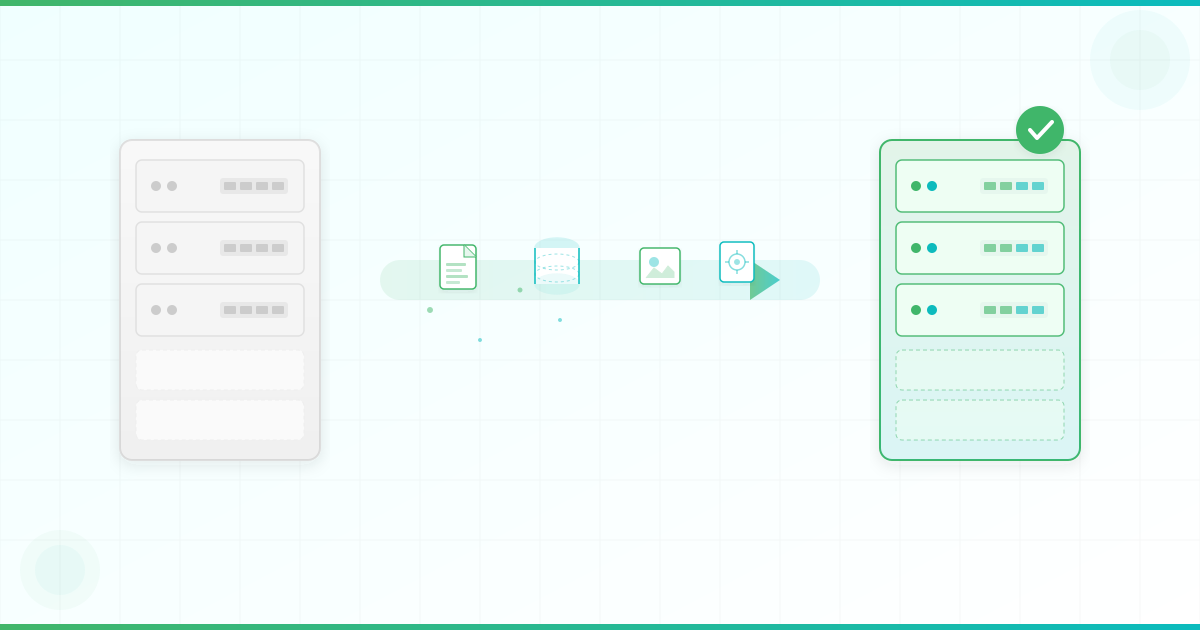



You need to migrate your website to a new hosting provider, but the process feels risky. What if you lose files? What if your site breaks or your search rankings drop?
Here is the truth: when you migrate your website to a new hosting provider, you are following a structured, repeatable process. Thousands of businesses do it every month with zero data loss and minimal downtime.
This guide walks you through three proven migration methods — manual FTP transfer, control panel tools (cPanel and DirectAdmin), and WordPress plugins. You get pre-migration and post-migration checklists so nothing falls through the cracks.
Whether you are upgrading to faster hosting, switching to a provider with better value, or moving to a host built for African businesses, this guide has you covered.
5 Signs It Is Time to Switch Your Hosting Provider
Not every hosting frustration requires a migration. But these signs point to a real problem that a new provider can fix:
- Frequent downtime or slow load times. If your site regularly takes more than three seconds to load or goes offline during peak hours, your host’s infrastructure is holding you back. Slow hosting directly hurts your revenue — every hour of downtime means lost customers and missed sales.
- Hidden fees or unexpected renewal prices. Your introductory rate doubled at renewal. Support upgrades cost extra. SSL certificates require a separate purchase. Transparent pricing matters.
- Poor customer support. You submit a ticket and wait days for a generic response. When your website is down, you need fast, knowledgeable support.
- You have outgrown your current plan. Your traffic has grown, but your host does not offer a clear upgrade path. You need a provider that lets you scale from shared to VPS hosting without starting over.
- Security concerns. Your host does not include a firewall, malware scanning, or free SSL. Security should be built in, not bolted on as an upsell. Learn more about web hosting security best practices.
If two or more of these describe your situation, migration is worth the effort.
Pre-Migration Checklist: Prepare Before You Transfer

A successful website migration starts with preparation. Complete every item on this checklist before touching any files:
1. Back Up Everything
Create a complete backup of your current website. This includes:
- All website files (HTML, CSS, JavaScript, images, uploads)
- Databases (MySQL/MariaDB exports)
- Email accounts and their contents
- DNS zone records
- SSL certificate files (if custom, not Let’s Encrypt)
- Any custom server configurations (.htaccess, php.ini)
Store your backup in two places — your local computer and a cloud storage service. Never rely on a single copy.
2. Document Your Current Settings
Write down these details from your current host:
- PHP version and extensions in use
- Database names, usernames, and passwords
- Email accounts and forwarders
- Cron jobs or scheduled tasks
- Custom DNS records (MX, TXT, CNAME)
- FTP/SFTP credentials
You will need these when configuring your new hosting environment.
3. Lower Your DNS TTL
This step is critical and often overlooked. DNS Time-to-Live (TTL) controls how long servers cache your domain’s IP address.
Lower your TTL to 300 seconds (5 minutes) at least 48 hours before migration. This forces DNS servers to check for updates more frequently, which reduces the delay when you point your domain to the new host.
If your current TTL is 86400 (24 hours), servers will keep serving the old IP for up to a full day after you switch. A 300-second TTL shrinks that window dramatically.
4. Set Up Your New Hosting Account
Sign up with your new hosting provider, but do not cancel your old account yet. You need both active during the transition.
At this stage:
- Choose your hosting plan and control panel preference
- Note the new server’s IP address and nameservers
- Set up any required databases on the new server
- Install SSL certificates (many providers, including LUMINWEB, include free SSL on all plans)
5. Keep Both Hosts Active
Maintain your current hosting account until you have verified everything works on the new server and DNS has fully propagated. Plan for at least one week of overlap.
Choose Your Migration Method
Three approaches work for website migration. The right one depends on your website type, technical comfort, and control panel availability.
| Method | Best For | Technical Level | Speed |
|---|---|---|---|
| Manual (FTP + phpMyAdmin) | Any website type, full control | Intermediate | 1-3 hours |
| Control Panel Tools (cPanel/DirectAdmin) | Sites on cPanel or DirectAdmin hosts | Beginner-friendly | 30-60 minutes |
| WordPress Plugins | WordPress sites only | Beginner-friendly | 15-45 minutes |

Quick decision guide:
- Moving between two cPanel hosts or two DirectAdmin hosts? Use the control panel migration tools.
- Running WordPress? A migration plugin is the fastest option.
- Have a custom-built site, or moving between different control panels? Go with the manual method.
Need help choosing between control panels? Read our cPanel vs DirectAdmin comparison for a detailed breakdown.
Method 1: Manual Migration via FTP and phpMyAdmin
This method works for any website type and gives you complete control over the process. It is the go-to approach when you need to transfer a website between hosts that use different control panels.
Step 1: Download Your Website Files
- Connect to your current host using an FTP client (FileZilla is free and reliable).
- Navigate to your site’s root directory (usually
public_htmlorwww). - Select all files and folders.
- Download everything to a local folder on your computer.
Bandwidth-saving tip: If you are working on a mobile data connection — common for many businesses in Ghana and across West Africa — compress the files on the server first. Use your host’s File Manager to create a ZIP archive of the public_html folder, then download the single compressed file.
Step 2: Export Your Database
- Log into phpMyAdmin on your current host.
- Select your website’s database from the left panel.
- Click the Export tab.
- Choose Quick export method and SQL format.
- Click Go to download the
.sqlfile.
For large databases (over 50MB), use the Custom export method and enable compression (gzip).
Step 3: Upload Files to the New Host
- Connect to your new host via FTP using the credentials from your new hosting account.
- Navigate to the site’s root directory.
- Upload all website files.
Step 4: Create and Import the Database
- In your new host’s control panel, create a new MySQL database.
- Create a database user and assign full privileges.
- Open phpMyAdmin on the new host.
- Select the new database.
- Click the Import tab.
- Choose your
.sqlbackup file and click Go.
Step 5: Update Configuration Files
Update your website’s database connection settings to match the new host.
For WordPress, edit wp-config.php:
DB_NAME— your new database nameDB_USER— your new database usernameDB_PASSWORD— your new database passwordDB_HOST— usuallylocalhost, but check with your new host
For other CMS platforms (Joomla, Drupal), update the equivalent configuration file.
Step 6: Test Before Switching DNS
Preview your site on the new server before making it live. Edit your computer’s hosts file to point your domain to the new server’s IP address:
- Windows:
C:\Windows\System32\drivers\etc\hosts - macOS/Linux:
/etc/hosts
Add this line: [new-server-IP] yourdomain.com
Open your browser and verify every page loads correctly. Remove the hosts file entry when done.
Method 2: Control Panel Migration Tools (cPanel and DirectAdmin)
If both your old and new hosting providers use the same control panel, built-in migration tools handle most of the heavy lifting.
cPanel Transfer Tool
cPanel’s Transfer Tool migrates single or multiple accounts between cPanel servers. It transfers files, databases, email accounts, and configurations in one operation.
- Log into your new host’s WHM (Web Host Manager) or ask your new host’s support team to initiate the transfer.
- Navigate to Transfer Tool or Copy Multiple Accounts.
- Enter your old server’s IP address, port, and root credentials (or ask your current host for a cPanel backup file).
- Select the accounts to transfer.
- Start the transfer and monitor the progress log.
Alternative approach: If you do not have WHM access, create a full cPanel backup:
- Log into cPanel on your current host.
- Go to Backup or Backup Wizard.
- Generate and download a Full Account Backup.
- Send the backup file to your new host’s support team for restoration.
DirectAdmin Backup/Transfer
DirectAdmin’s Admin Backup/Transfer tool creates a tar.gz archive of each account. This archive includes databases, email accounts, email data, domains, website files, and subdomains for one-click restore on another DirectAdmin server.
- Log into DirectAdmin on your current host.
- Navigate to Admin Backup/Transfer (Admin level) or Create/Restore Backups (User level).
- Create a full backup of your account.
- Download the
.tar.gzarchive. - On your new DirectAdmin host, go to Admin Backup/Transfer.
- Upload and restore the archive.
LUMINWEB offers both cPanel and DirectAdmin with built-in migration tools, making your move straightforward whether you are coming from a cPanel or DirectAdmin host.
Method 3: WordPress Plugin Migration
If you run a WordPress site, migration plugins automate the entire process. No FTP, no database exports, no manual file editing.
Option A: Duplicator
Duplicator has over 1,000,000 active installations with a 4.9/5 rating on WordPress.org. It packages your entire site into a single archive.
- Install and activate the Duplicator plugin on your current WordPress site.
- Go to Duplicator > Packages and click Create New.
- Run the system scan and click Build to generate the package.
- Download both the Installer file and the Archive file.
- On your new host, install a fresh WordPress instance using Softaculous or the one-click installer.
- Upload the installer and archive files to the new site’s root directory via FTP.
- Open
yourdomain.com/installer.phpin your browser (use the hosts file trick from Method 1 if DNS has not switched yet). - Follow the installer wizard — enter your new database credentials when prompted.
- Duplicator will extract the archive, import the database, and update URLs automatically.
Option B: All-in-One WP Migration
All-in-One WP Migration has over 5,000,000 active installations and a 4.5/5 rating. It is the simpler option for smaller sites.
- Install and activate All-in-One WP Migration on your current WordPress site.
- Go to All-in-One WP Migration > Export.
- Choose Export To > File to download your site as a single file.
- On your new host, install a fresh WordPress instance.
- Install and activate All-in-One WP Migration on the new site.
- Go to All-in-One WP Migration > Import.
- Upload the export file.
- The plugin will import everything — content, media, plugins, themes, and database.
Note: The free version of All-in-One WP Migration has an import size limit. For larger sites, the Duplicator method or manual migration may be more practical.
If you are new to WordPress hosting, our guide on how WordPress hosting works explains the fundamentals.
How to Migrate Your Email Accounts
Email migration is the step most guides skip — and the one that causes the most headaches for small businesses.
Before You Switch DNS
- Document all email accounts on your current host — addresses, passwords, forwarders, auto-responders, and mailing lists.
- Recreate email accounts on your new host with the same addresses and passwords.
- Download email archives from your current host using an email client (Thunderbird or Outlook) connected via IMAP. IMAP syncs all messages from the server to your local client.
- Copy MX records and any SPF/DKIM/DMARC TXT records from your current DNS zone.
After DNS Switches
Once DNS propagation completes and your domain points to the new host:
- Configure your email client to connect to the new host’s mail server.
- Upload any downloaded email archives to the new server.
- Verify SPF, DKIM, and DMARC records are correctly set on the new DNS zone to maintain email deliverability.
- Send test emails (both internal and external) to confirm everything works.
Important: During DNS propagation, some emails may arrive at your old host and some at your new host. Keep both accounts monitored for at least 72 hours after the switch.
How to Update DNS and Point Your Domain to the New Host
Once you have verified your site works on the new server, it is time to update DNS.
DNS (Domain Name System) translates your domain name into the server IP address where your website lives. When you update your nameservers, you are telling the internet to find your site at the new host.
How to Update Your Nameservers
- Get your new host’s nameserver addresses (for example,
ns1.newhostprovider.comandns2.newhostprovider.com). - Log into your domain registrar (this may be a different company from your hosting provider).
- Find the Nameservers or DNS Management section.
- Replace the old nameservers with the new ones.
- Save the changes.
What Is DNS Propagation?
DNS propagation is the time it takes for nameserver changes to spread across the internet’s global network of DNS servers.
DNS propagation typically takes 24-48 hours to fully complete, though many updates finish within 4-8 hours. During this window, some visitors will see your site on the old server while others see the new one.
This is exactly why you keep both hosting accounts active during migration. Both servers serve your site correctly, so visitors experience no disruption regardless of which server they reach.
Speed Up Propagation
If you lowered your TTL to 300 seconds 48 hours before migration (as recommended in the pre-migration checklist), propagation will be significantly faster.
You can check propagation progress using free tools like whatsmydns.net — it shows which DNS servers worldwide have updated to your new IP.
Post-Migration Testing Checklist
Do not assume everything works just because the homepage loads. Run through every item on this checklist after you transfer your website to the new host:
Functionality Checks
- All pages load without errors (check at least 10-15 key pages)
- Images display correctly (no broken image icons)
- Contact forms submit successfully and deliver emails
- E-commerce cart, checkout, and payment processing work (if applicable)
- Login and user registration function properly
- Search functionality returns correct results
- Custom scripts and integrations work (analytics, chat widgets, maps)
Security Checks
- SSL certificate is active (green padlock in browser)
- All pages load over HTTPS (no mixed content warnings)
- Security headers are in place
- File permissions are set correctly
Performance Checks
- Page load speed is equal to or better than the old host
- Database queries execute without timeouts
- Media files (images, videos, PDFs) load promptly
Email Checks
- Send and receive test emails from every account
- Forwarders and auto-responders work
- SPF/DKIM/DMARC records pass validation (use mail-tester.com)
Mobile Testing
- Test your site on an actual mobile device over a mobile data connection
- Verify page load times on a typical 3G/4G connection
- Confirm forms and interactive elements work on touchscreens
For a deeper look at optimizing your site’s speed after migration, read our guide on how to speed up your site with optimized hosting.
How to Protect Your SEO During a Hosting Migration
A hosting migration should not hurt your search rankings — if handled correctly. SEO performance typically stabilizes within 30-90 days after a properly handled hosting migration.
Before Migration
- Export your current URL list from Google Search Console or crawl your site with a tool like Screaming Frog.
- Document your current rankings for key search terms.
- Set up 301 redirects if any URLs will change (hosting migration alone should not change URLs, but verify).
After Migration
- Verify your site in Google Search Console. If your site was already verified, reconfirm that verification still works.
- Submit your updated sitemap. Go to Search Console > Sitemaps and submit your XML sitemap URL.
- Use the URL Inspection tool to request indexing of your most important pages.
- Check for crawl errors in Search Console over the following week.
- Verify your robots.txt file is accessible and not blocking search engines.
- Monitor rankings for your key terms over the next 30-90 days.
Common SEO Pitfalls to Avoid
- Do not change your URL structure during a hosting migration. One change at a time.
- Do not block search engines on your new server. Check robots.txt and any staging environment settings.
- Do not forget HTTPS. If your old site used HTTPS, your new host must have SSL active before DNS switches. Losing HTTPS is an immediate ranking signal to Google.
Common Website Migration Mistakes and How to Avoid Them
Cancelling your old host too early. Keep your old hosting account active for at least one week after DNS propagation completes. This gives you a fallback if something goes wrong.
Skipping the backup. Even when using migration tools, always create an independent backup before starting. Tools can fail, and your backup is your safety net.
Forgetting about email. Your email accounts live on your hosting server. If you migrate website files but skip email setup, your business email stops working the moment DNS switches.
Migrating during peak traffic hours. Schedule your DNS change during your lowest traffic period. For most Ghana and West Africa-focused businesses, late evening or early morning local time works well.
Not testing on the new server first. Always use the hosts file method or a temporary URL to verify your site works before changing DNS. Do not make the switch and hope for the outcome you want.
Ignoring file permissions. After uploading files to the new server, verify that directory permissions (typically 755) and file permissions (typically 644) are set correctly. Incorrect permissions cause blank pages or access errors.
FAQ: Website Migration Questions Answered
How long does it take to migrate a website to a new host?
The actual file transfer takes anywhere from 15 minutes (using a WordPress plugin for a small site) to several hours (manual migration of a large site). DNS propagation adds another 4-48 hours. Plan for the full process to take one to two days from start to finish.
Can I move my website to another host without downtime?
Yes. By keeping both hosting accounts active during migration and lowering your DNS TTL beforehand, visitors experience no interruption. Both servers serve your site correctly during the propagation window.
Will I lose my SEO rankings if I change hosting?
Not if you handle the migration correctly. Keep your URL structure identical, maintain HTTPS, submit your sitemap to Google Search Console after migration, and monitor for crawl errors. SEO performance typically stabilizes within 30-90 days.
How do I transfer my domain to a new host?
You do not need to transfer your domain to switch hosting providers. Simply update your domain’s nameservers at your registrar to point to the new host. Domain transfer (moving the registration itself) is a separate, optional step.
What is DNS propagation and how long does it take?
DNS propagation is the process of DNS servers worldwide updating to reflect your new nameserver settings. It typically takes 24-48 hours to fully complete, though many updates finish within 4-8 hours. Lowering your TTL to 300 seconds before migration speeds this up.
How do I migrate a WordPress site to a new host?
The fastest method is using a migration plugin like Duplicator or All-in-One WP Migration. Install the plugin on your current site, export your site as a package, install fresh WordPress on your new host, and use the plugin to import everything. The entire process takes 15-45 minutes. For detailed WordPress hosting options, see our guide on how WordPress hosting works.
Your Migration Roadmap: Next Steps
Website migration is a methodical process, not a risky gamble. Follow the checklists in this guide, choose the method that matches your setup, and test thoroughly before making the switch.
Here is your action plan:
- This week: Complete the pre-migration checklist. Back up everything. Lower your DNS TTL.
- Migration day: Transfer your files using the method you chose. Test on the new server. Update DNS.
- The following week: Monitor DNS propagation. Run through the post-migration checklist. Verify email delivery. Submit your sitemap to Google Search Console.
- Over the next 30-90 days: Monitor your search rankings and site performance. Address any issues promptly.
Need help understanding the different types of hosting available? Start with our beginner’s guide on what web hosting is and how it works.
Ready to migrate? LUMINWEB gives you cPanel or DirectAdmin, free SSL, and a 30-day money-back guarantee — so you can switch risk-free. Explore LUMINWEB Shared Hosting plans or check out LUMINWEB WordPress Hosting if you run a WordPress site.
